
Can Korean-American Kids Read Korean? A Simple Guide to Learning Korean at Home 미국에서 태어난 한국 아이가 한글을 읽을 수 있을까요?
Can Korean-American Kids Read Korean? A Simple Guide to Learning Korean at Home
미국에서 태어난 한국 아이가 한글을 읽을 수 있을까요?
Learn Everyday Korean at Home: A Simple Visual Guide for Beginners
Affiliate Disclosure: This post contains affiliate links. As an Amazon Associate, I earn from qualifying purchases at no additional cost to you.
Why Is Learning Korean Difficult for Korean-American Kids?
As a Korean mom raising a child in the United States, I understand how challenging it can be to teach Korean at home.
I also taught at a Korean school in the U.S. Through that experience, I saw how many Korean-American children struggled with reading and writing Korean.
Some children understand Korean when their parents speak. Others can say a few familiar words. However, reading Korean books can be much more difficult.
For example, your child might understand a simple Korean phrase but struggle to recognize the same words in writing.
Why does this happen?
Many Korean-American children grow up speaking and reading English throughout the day. They use English at school, with friends, and during everyday activities.
As a result, they may have fewer opportunities to practice reading Korean.
The good news is that learning Korean can become easier with familiar words, visual examples, and consistent practice.
Why Some Beginner Korean Books Feel Too Difficult
Many Korean children’s books are written for children growing up in Korea.
These books often assume that young readers already understand everyday Korean vocabulary.
However, Korean-American children may have different language experiences.
For example:
- They may understand Korean but respond in English.
- They may recognize spoken words but not written ones.
- They may struggle with unfamiliar Korean vocabulary.
- They may feel discouraged when sentences become too complicated.
Therefore, it’s important to choose learning materials that match your child’s language level.
Starting with simple, familiar words can help children build confidence.
Start With Everyday Korean Words
One of the easiest ways to introduce Korean is to begin with objects your child already knows.
For example, children see their beds, toys, food, and family members every day.
When they connect these familiar objects with Korean words, the language becomes more meaningful.
Everyday Korean Vocabulary to Practice
Here are six useful categories to explore together:
- 👨👩👧 Family members: Learn words for parents, siblings, and grandparents.
- 🍳 Kitchen vocabulary: Practice names of common kitchen objects.
- 🛏️ Bedroom essentials: Learn words for beds, pillows, and blankets.
- 🛁 Bathroom items: Introduce familiar bathroom vocabulary.
- 🍎 Favorite foods: Practice Korean words for everyday foods.
- 🏠 Household objects: Identify common items around the home.
You don’t need to teach everything at once.
Instead, choose a few words each day. Point to the objects, say their Korean names, and encourage your child to repeat them.
Over time, these small activities can help children become more comfortable with Korean vocabulary.
How to Make Korean Learning Fun at Home
Learning Korean doesn’t have to feel like another school assignment.
In fact, short and enjoyable activities can be a great way to introduce a new language.
1. Use Pictures and Familiar Objects
Show your child a picture of an everyday object.
Then say its Korean name together.
For example:
- 사과 (sagwa) — Apple
- 물 (mul) — Water
- 책 (chaek) — Book
- 집 (jip) — House
Pictures help children connect new words with familiar objects.
2. Practice a Few Words Every Day
Start with three to five Korean words.
Review them during everyday routines, such as mealtime or bedtime.
Short, consistent practice can be more manageable than long study sessions.
3. Encourage Tracing and Writing
Once your child begins recognizing Korean letters, introduce simple writing activities.
Tracing Korean words can help children become familiar with letter shapes.
Most importantly, celebrate small improvements.
Every new word is progress!
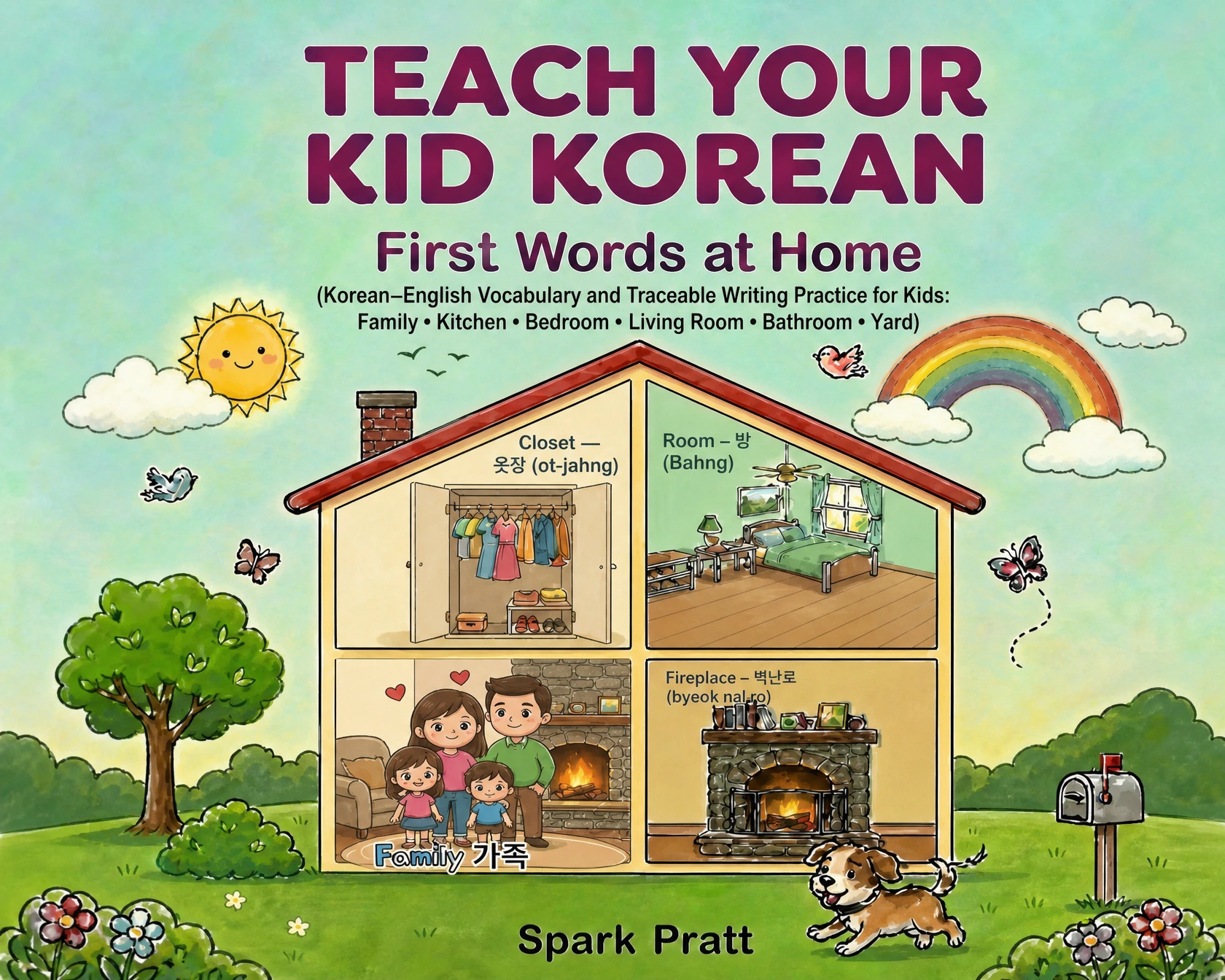
Why I Created Teach Your Kid Korean: First Words at Home
As a Korean language educator, I wanted to create a book that makes learning Korean more accessible to beginners.
I also wanted parents to have a simple resource they could use at home without preparing complicated lessons.
That’s why I created Teach Your Kid Korean: First Words at Home.
This beginner-friendly workbook introduces practical Korean vocabulary through colorful illustrations and writing activities.
What’s Inside the Book?
The book includes:
- Everyday Korean vocabulary that children can recognize and use
- Colorful illustrations to support visual learning
- English translations to help beginners understand new words
- Traceable Korean words for handwriting practice
- Beginner-friendly lessons designed for children and heritage learners
Although the title includes the word “Kid,” the book can also be useful for adult beginners who want to learn everyday Korean vocabulary.
Explore Teach Your Kid Korean: First Words at Home on Amazon
Who Can Benefit From This Korean Workbook?
This book may be helpful for:
- Korean-American children learning their heritage language
- Students attending Korean language schools
- Parents teaching Korean at home
- Homeschooling families
- Beginners interested in Korean language and culture
- Adults who want to learn practical Korean vocabulary
Whether you’re teaching your child or learning Korean yourself, the goal is the same: to make learning approachable and enjoyable.
Give Your Child a Simple First Step Toward Learning Korean
Teaching Korean at home doesn’t require complicated grammar lessons or hours of studying.
Sometimes, the best place to begin is with the words children already encounter every day.
Start with familiar objects. Use pictures. Practice together. Most importantly, make learning a positive experience.
With patience and encouragement, your child can gradually develop confidence in recognizing and reading Korean words.
If you’re looking for a colorful introduction to Korean vocabulary, I invite you to explore my workbook.
📚 Teach Your Kid Korean: First Words at Home — Available on Amazon
Thank you for supporting my work as an independent author and Korean language educator.
Happy Korean learning!
Spark Pratt & S. Park
📚 Available on Amazon